Collective
Early accessCollective is an autonomy layer for drone operations. It attaches to almost any group of drones and lets them work as a coordinated swarm. The operator issues a single plain command, and the swarm organises itself, divides the work, and carries it out, with no pilot assigned to each aircraft.
From flying drones to directing them
Most drone operations today are still built around one pilot per aircraft. That works for a single drone and a single task. It does not scale. The moment you want several drones covering a large site, the coordination falls on people: who flies where, who hands off to whom, and what happens when one unit has to land.
The aircraft are capable. The bottleneck is the human effort needed to direct them. Collective removes that bottleneck by moving the coordination into the swarm itself.
What Collective does
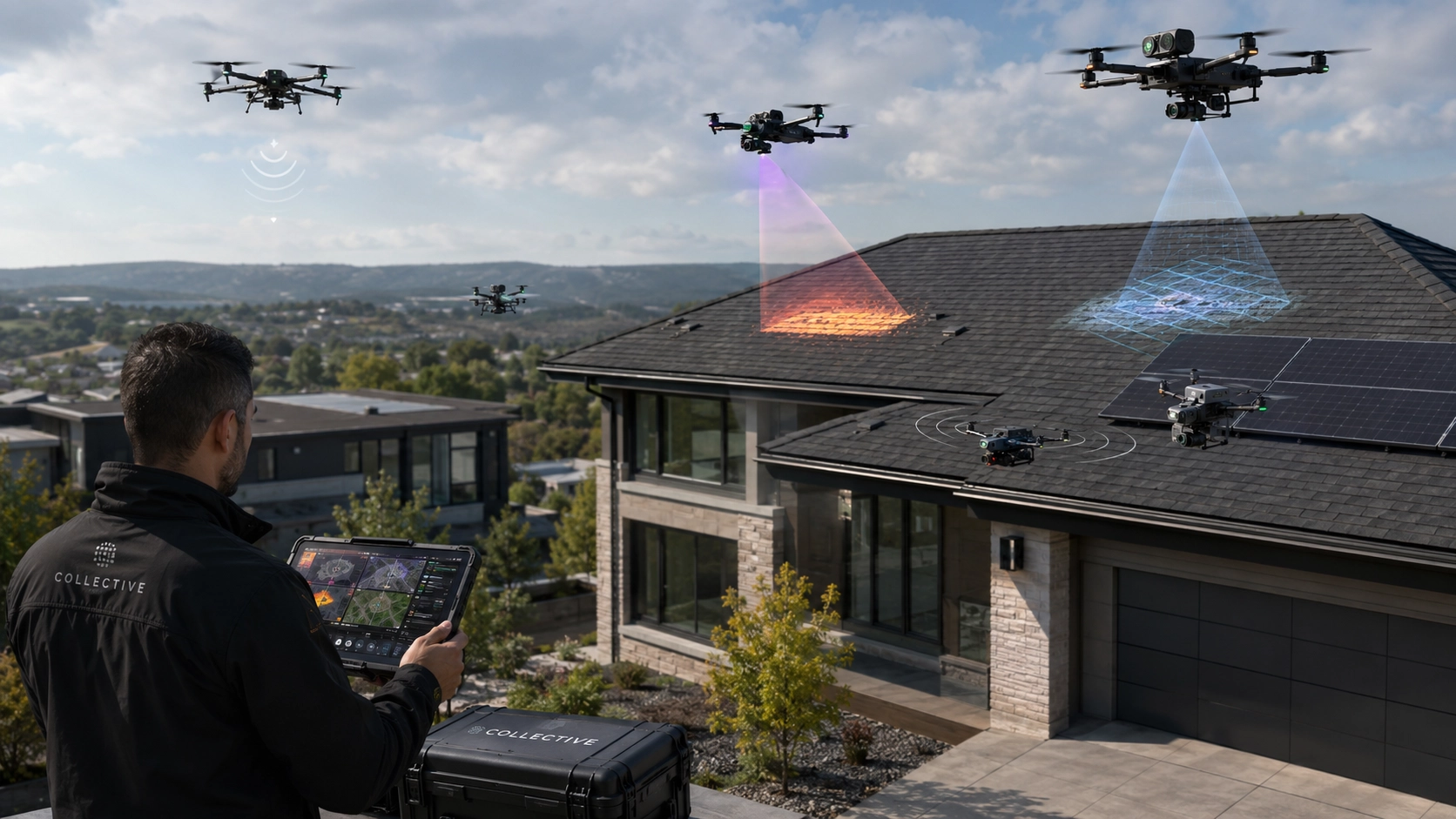
Survey this roof. Map this field. Inspect this stretch of pipeline. Collective takes that objective and works out the rest. It splits the task across the available drones, assigns each one its part, and runs the operation as a single coordinated effort. The operator supervises an outcome rather than piloting a fleet.
If a drone fails or has to drop out mid-task, the swarm notices and adapts. The remaining units redistribute the work and carry on, so the mission completes even when individual aircraft do not.
Collective is designed as an add-on rather than a closed system. It is protocol-agnostic and can attach to a range of platforms, so operators are not forced to replace their existing fleet or commit to a single manufacturer. You add the autonomy layer to the drones you already trust.
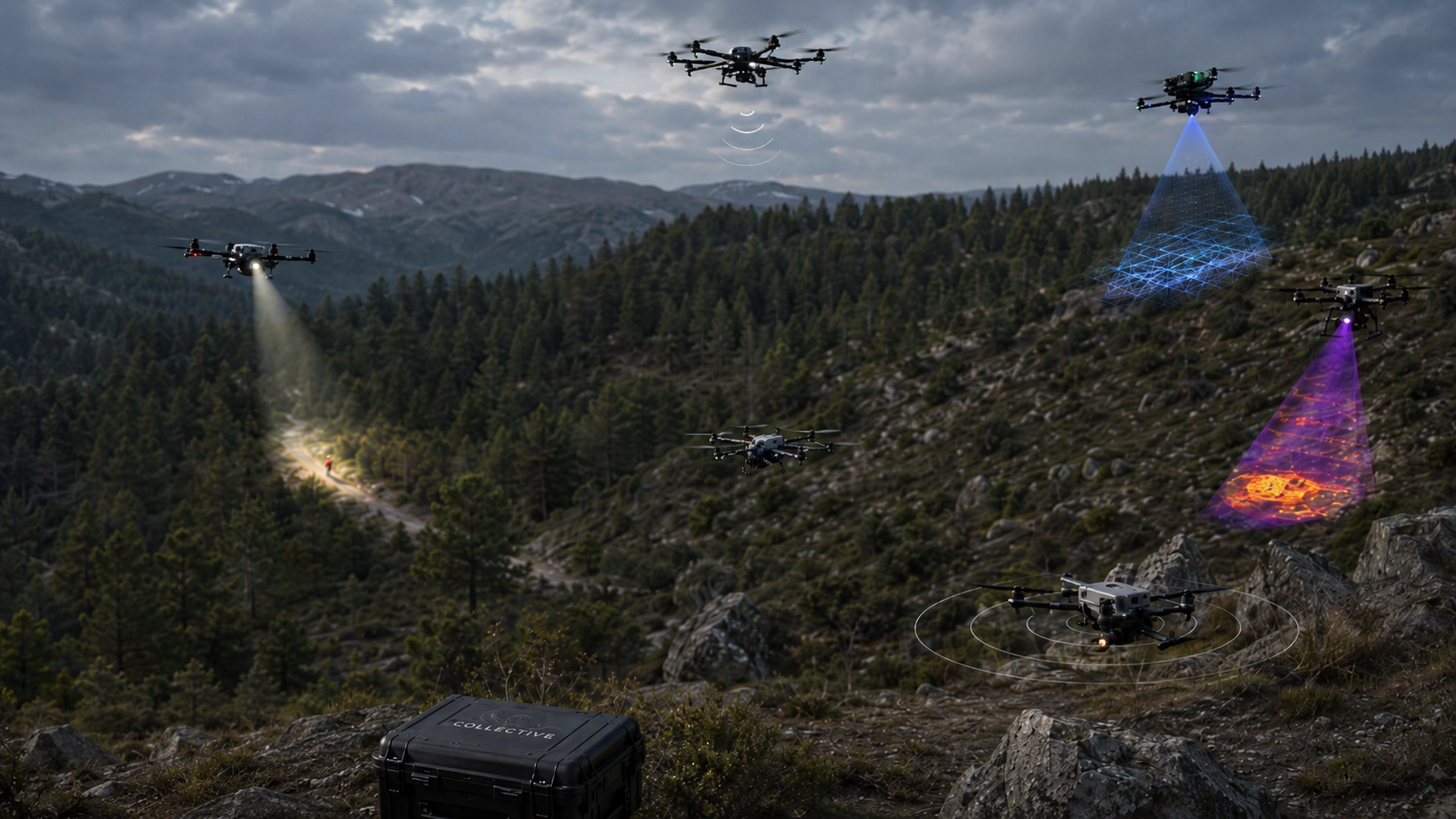
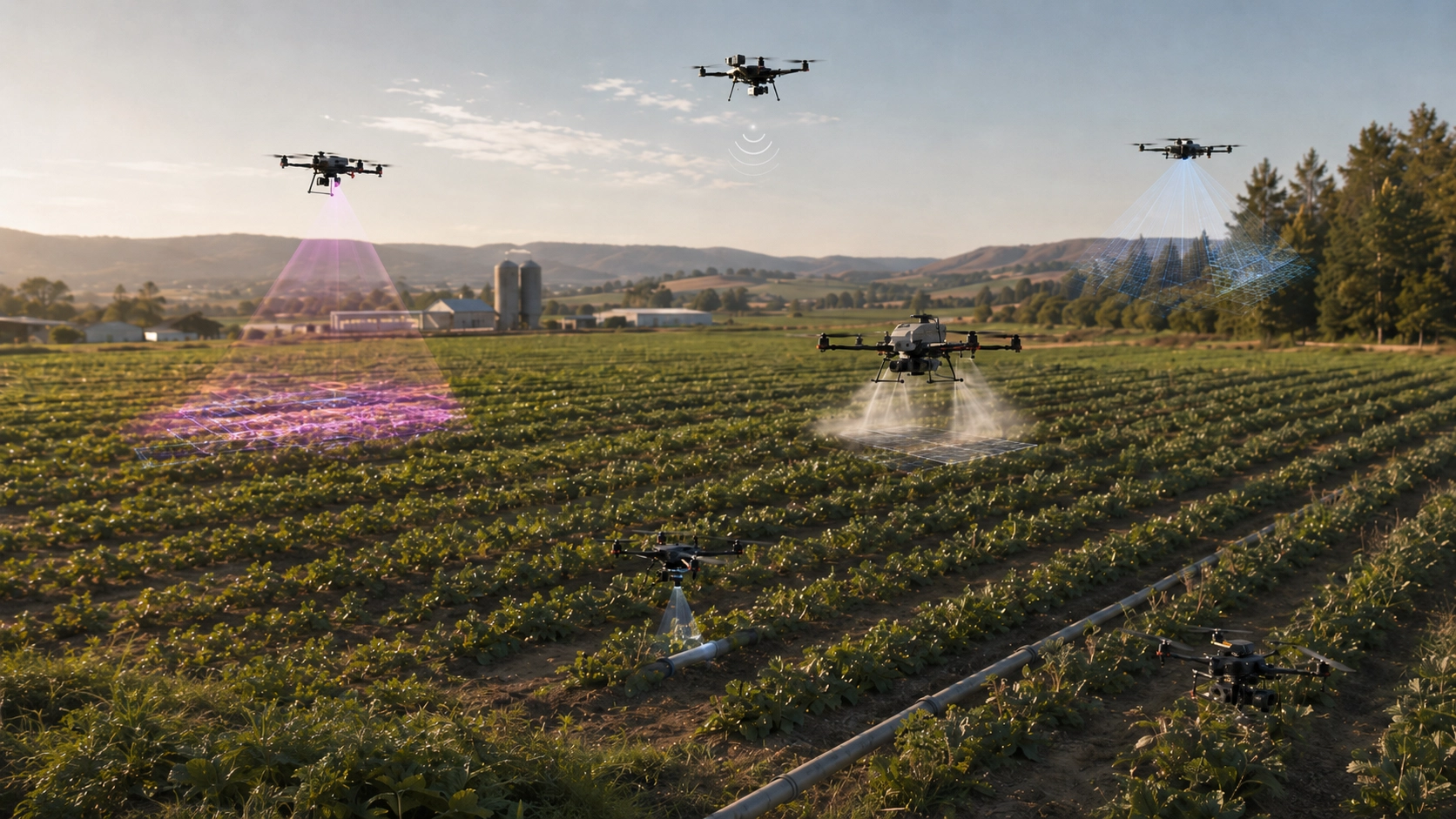
Inspecting large structures and infrastructure. Surveying and mapping at scale. Covering wide areas where speed and completeness matter. The same coordination holds up in higher-stakes settings, from search and rescue to public safety and security operations, where losing a single unit cannot be allowed to stop the mission.
As the size of the job grows, you add more drones rather than more pilots, and Collective absorbs the complexity.
Collective changes what one operator can do. Instead of managing aircraft, they set objectives and the fleet delivers them. It's a more capable, more resilient way to run drone operations, and it scales in a way that pilot-per-drone never will.
Collective is currently available to a limited number of fleet operators, integrators, and research partners.